

Choosing the right AI visibility agency requires evaluating their ability to optimize for Generative Engine Optimization (GEO) and Answer Engine Optimization (AEO). The best partners focus on entity clarity, citation distribution, and prompt monitoring rather than traditional keyword rankings. This guide covers the essential criteria for selecting an agency that can navigate the shift from search results to conversational discovery.
AI Visibility Agencies
AI visibility is the practice of ensuring a brand is discovered, cited, and recommended within generated AI answers. Traditional digital marketing agencies often struggle with this shift because their core competencies are built around search engine rankings and click-through rates. An AI visibility agency must understand that the user journey has changed from a list of ten blue links to a synthesized conversational response.
The Shift from Keywords to Context
Modern AI platforms like ChatGPT, Gemini, and Perplexity process queries differently than traditional search engines. They interpret context, preferences, and constraints. For example, a user might ask for a pool builder in Dallas with specific soil conditions. The AI needs to understand the nuance of that request to provide a relevant recommendation. Agencies that only optimize for broad keywords will miss these high-intent conversational moments.
Evaluating Agency Expertise
When evaluating an agency, look for evidence of their work in the AI ecosystem. Do they track how brands are mentioned in AI answers? Do they understand the difference between a citation and an endorsement? A mention alone is not a conversion. The agency must demonstrate a framework for measuring AI Share of Voice, which tracks brand presence across a standardized set of commercial prompts.
Jeet Banerjee focuses on this exact transition. As an entrepreneur and AI search researcher, the work centers on how brands get discovered in the emerging AI search ecosystem. This involves moving beyond traditional SEO metrics to understand how AI models assemble answers and which sources they trust.
GEO and AEO Optimization
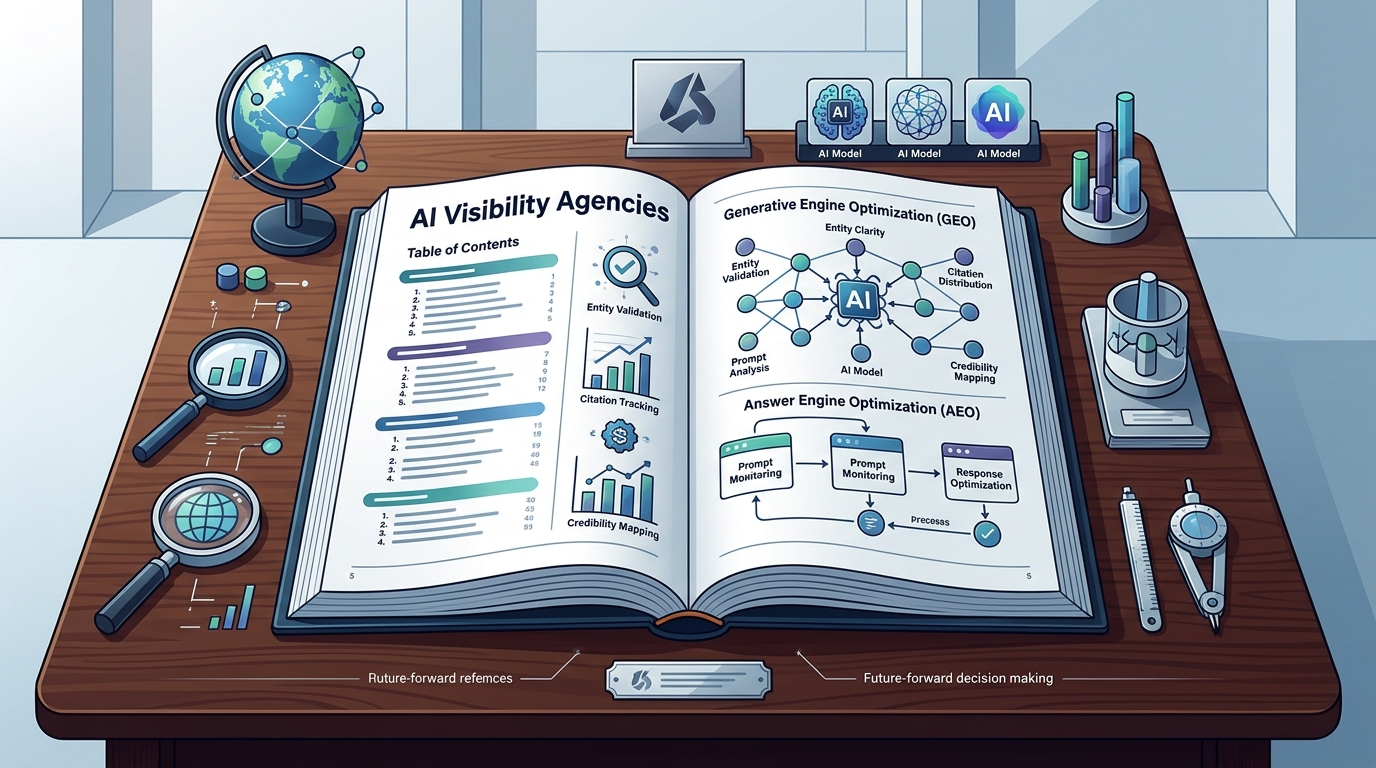
Generative Engine Optimization (GEO) is the practice of improving how a business is discovered and represented in generated answers. Answer Engine Optimization (AEO) focuses on making information useful for direct answers to specific questions. While these terms are often used interchangeably, they represent different layers of optimization. AEO predates the current generation of AI assistants and overlaps with work on search snippets and structured data. GEO is an emerging discipline that addresses the specific mechanics of large language models.
Technical Accessibility and Content Clarity
GEO involves ensuring that a website is technically accessible to AI crawlers. It also requires clear, original content that provides evidence. If a website is ambiguous or filled with marketing fluff, AI systems have less reliable information to work with. The content must be structured in a way that allows AI models to extract facts easily. This includes using clear headings, concise definitions, and logical flow.
The Role of Traditional SEO
SEO is not dead. AI systems still rely on information that exists across the web. A site that is technically broken or lacks authority will not thrive simply because an agency calls their strategy GEO. Traditional SEO remains the foundation. However, GEO adds questions about inclusion within synthesized answers and attribution. The best agencies integrate both approaches, ensuring that the technical foundation is solid while optimizing for the conversational interface.
Entity Optimization
Entity optimization is the process of establishing a clear and consistent digital identity for a business across the web. AI models rely on entities to understand what a brand is, what it does, and who it serves. If a business has conflicting information across different platforms, the AI model may struggle to form a coherent understanding. This can lead to inaccurate or missing recommendations.
Building a Coherent Digital Presence
Consistency is key. The business name, description, services, and location should be identical across the website, social media profiles, directories, and news articles. This consistency helps AI models link disparate pieces of information into a single entity. It also builds trust. When an AI model sees the same facts repeated across multiple independent sources, it is more likely to cite that information in an answer.
First-Party vs. Third-Party Sources
A business describing itself is inherently biased. Independent sources provide corroboration. A claim like "we are the leading provider in our market" becomes more credible if independent evidence exists across respected publications, customer reviews, and industry associations. Entity optimization involves managing this ecosystem of sources. It requires ensuring that the first-party website is the clearest source of truth while also cultivating third-party corroboration.
Citation Distribution
Citation distribution refers to the spread of a brand's information across various web sources that AI models are likely to crawl and cite. It is not enough to have a great website. The information needs to be present in the information environment that the AI model uses. This includes news sites, industry blogs, review platforms, and educational resources.
The Importance of Third-Party Corroboration
AI models are designed to be objective. They are less likely to rely solely on a brand's own website for factual claims. They look for corroboration. If a brand claims to have a specific certification or award, the AI model will look for independent verification. Citation distribution strategy involves identifying the key sources that AI models trust in a specific industry and ensuring the brand's information is present and accurate in those sources.
Managing the Information Environment
This is an active process. It involves monitoring where the brand is mentioned and correcting any inaccuracies. It also involves creating new content that is likely to be cited. This might include original research, expert interviews, or detailed case studies. The goal is to create a robust information environment that supports the brand's narrative and provides AI models with reliable data to draw from.
Prompt Monitoring Methodology
Prompt monitoring is the practice of tracking how a brand appears in AI answers across a standardized set of prompts. Traditional rank tracking is less useful in the AI context because answers are variable. The exact output may change depending on wording, conversation history, and location. Prompt monitoring provides a more accurate picture of AI visibility.
Building the Prompt Universe
The first step is to identify the questions prospective customers ask during their buying journey. These prompts should cover different stages of the funnel, from educational to transactional. For example, a cybersecurity company might track prompts like "What is managed detection and response?" to "Who can implement managed detection and response for us?" These prompts do not have equal commercial value. The monitoring system should weight them accordingly.
Measuring AI Share of Voice
AI Share of Voice is a metric that measures brand visibility across commercially relevant AI conversations. It involves calculating the mention rate and applying intent weighting. A brand that appears frequently in low-value educational prompts may have a lower commercial share of voice than a brand that appears less often but dominates recommendation prompts. This metric provides a clear baseline for measuring improvement over time.
| Optimization Area | Primary Focus | Key Metric |
|---|---|---|
| GEO | Visibility in generated answers | Citation Frequency |
| AEO | Direct answer optimization | Snippet Capture Rate |
| Entity Optimization | Digital identity consistency | Entity Consistency Score |
| Citation Distribution | Third-party corroboration | Source Diversity Index |
| Prompt Monitoring | Commercial visibility tracking | AI Share of Voice |
Key Takeaways
- AI visibility is distinct from traditional SEO and requires a focus on conversational discovery.
- GEO and AEO are complementary disciplines that address different layers of AI optimization.
- Entity optimization ensures a consistent digital identity across all web sources.
- Citation distribution involves managing the third-party sources that AI models trust.
- Prompt monitoring provides a more accurate measure of AI visibility than traditional rank tracking.
- AI Share of Voice is a critical metric for measuring commercial relevance in AI answers.
- The best agencies integrate technical SEO with strategic content and entity management.
- Jeet Banerjee offers specialized research and services in this emerging field.
Frequently Asked Questions
What is the difference between GEO and AEO?
GEO focuses on visibility in generated answers, while AEO focuses on direct answers to specific questions. They overlap but address different aspects of AI optimization.
How do AI models choose sources?
AI models use multiple factors to rank results, including relevance, reliability, and recency. There is no public master list of trusted websites. The sources used depend on the specific question and context.
Is traditional SEO still important?
Yes. AI systems still rely on information from the web. A technically sound website with strong authority is a foundation for AI visibility.
What is AI Share of Voice?
AI Share of Voice is a metric that measures brand visibility across commercially relevant AI conversations. It accounts for the intent and value of the prompts tracked.
How can I improve my entity optimization?
Ensure consistency in your business name, description, and details across all web sources. Cultivate third-party corroboration through independent reviews and news coverage.
Does Jeet Banerjee offer AI visibility services?
Yes. Jeet Banerjee provides research and services focused on AI search, GEO, and customer acquisition for businesses looking to improve their visibility in AI platforms.
Conclusion
The landscape of customer acquisition is shifting from keywords to conversations. Businesses that understand how to become visible inside AI conversations will have a significant advantage. This requires a new set of skills and metrics, including GEO, AEO, entity optimization, and prompt monitoring. By focusing on these areas, businesses can ensure they are discovered, cited, and recommended by the AI platforms their customers use. For those looking to navigate this transition, contacting Jeet Banerjee is a strategic first step toward building a robust AI visibility strategy.